

Comparing Urban and Rural Life in the Early 1900s

Compare and Contrast
Share to Google Classroom
Recommended Activity
Published By:
National Archives Foundation
Historical Era:
The Emergence of Modern America (1890-1930)
Thinking Skill:
Historical Analysis & Interpretation
Bloom’s Taxonomy:
Analyzing
Grade Level:
Upper Elementary, Middle School
Suggested Teaching Instructions
This activity is intended as a warm-up or introduction to a unit on urbanization, or for exploration of urban and rural environments. For grades 4-8. Approximate time needed is 10 minutes.
Present the activity to the entire class. Model careful analysis with students:
- What do you notice first?
- What do you see?
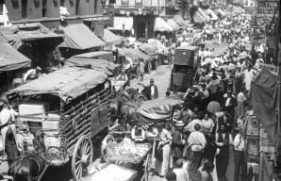
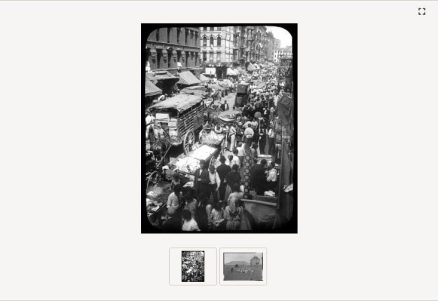
- List the people, objects and activities you see in each photograph.
Tell students that these are two images of urban and rural ways of life in America during the same time period. Ask students: “Which is the urban image? Which is the rural image? How can you tell?”
Ask students to create a T-chart and label one column ‘Urban” and the other column “Rural.” Working in pairs, students should record details they observe in each image. Instruct the pairs to create their own definitions of urban and rural.
Invite students to share their observations and definitions with the whole class. Help the class come to consensus definitions of urban and rural. Ask, “What are the characteristics of each?”
Ask students, “What do the two images tell us about life in the United States at the beginning of the 20th century?” (This question can be seen by clicking “When You’re Done.”)
This activity was adapted from “Urban vs. Rural” in the New York City Department of Education’s Passport to Social Studies, Grade 8, Unit 2, Lesson 2 (pg. 80-83).

To the extent possible under law, National Archives Foundation has waived all copyright and related or neighboring rights to “Comparing Urban and Rural Life in the Early 1900s”
Description
This short comparative analysis activity involves comparing and contrasting two photograph from the early 20th century: one from Hester Street on the Lower East Side of Manhattan and the other from Hancock Homestead on the great plains of Sun River, Montana. Students will explore the similarities and differences between these two photographs to understand the urban and rural environments.
Share this activity with your students
Documents in this Activity

Hancock Homestead, Sun River Montana.
The Emergence of Modern America (1890-1930)