


The Impact of Bloody Sunday in Selma

Making Connections
Share to Google Classroom
Recommended Activity
Published By:
National Archives Foundation
Historical Era:
Postwar United States (1945 to early 1970s)
Thinking Skill:
Historical Issues-Analysis & Decision-Making
Bloom’s Taxonomy:
Evaluating
Grade Level:
Middle School, High School
Suggested Teaching Instructions
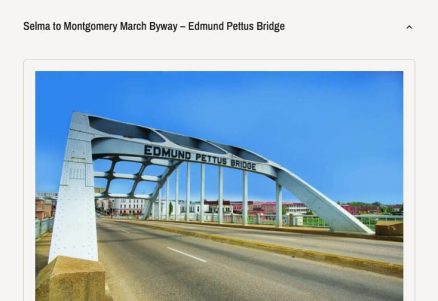
This activity can be used during a unit on the Civil Rights Movement, or to discuss the role that documents play in holding the Government accountable. It provides students with a basic understanding of the events that took place on March 7, 1965, when about 600 people met to march from Selma to Montgomery to protest continued violence and civil rights discrimination, and express the need for Federal voting rights legislation. It presents students with images and descriptions of the violent response from Alabama State Troopers — news that spread through television, newspapers, and magazines.
For grades 7-12. Approximate time needed is 45 minutes. This activity can be done in class in small groups, or individually outside of class.
Students should begin the activity by reading the introduction and directions, then click through the primary source documents and questions one at a time. Reinforce the instructions to click on “View Primary Source Details” to see the documents more closely — to be able to carefully examine the photograph contact sheets that show images of the protestors and Troopers on the Edmund Pettus Bridge, and to read the textual documents from the FBI file.
As they go through the documents, they will be asked to describe what happened in Selma and to respond to questions about the impact of seeing events like this in the media. They should write their answers in the blank text boxes included in the activity. Some of the questions are:
- The internet and social media didn’t exist in 1965. But how do you think these affect the public’s knowledge of — and reaction to — violence occurring today?
- Do you think Americans still contact their public representatives when they don’t like what they see?
- Do you think Congress would have passed and President Johnson would have signed the Voting Rights Act if not for the media coverage of Bloody Sunday?
When students click “When You’re Done,” they’ll learn that the documents they’ve seen come from the FBI case file about Bloody Sunday, and that the public couldn’t view these documents at the time because they were part of the FBI’s active files, and the Freedom of Information Act (FOIA) hadn’t been passed yet. Students will respond to:
- Do you think the Federal Government would have acted differently if FOIA had been in place and the FBI knew the public may be able to see their files?
- If so, what do you think they might have done differently?
Follow the activity with a class discussion about the overall impact of Bloody Sunday and its media coverage on the Civil Rights Movement, and on the value of public access to Government documents.

To the extent possible under law, National Archives Foundation has waived all copyright and related or neighboring rights to “The Impact of Bloody Sunday in Selma”
Description
In this activity, students will examine documents from the FBI case file about Bloody Sunday in Selma, Alabama. They will answer questions to show understanding of the events that took place, and how the spread of information about Selma impacted the Civil Rights Movement.
They will also be asked to think about whether the Federal Government would have acted differently if the FBI knew that the public may be able to see their files — the Government was not required to release records like this until the Freedom of Information Act (FOIA) gave the public the right to request Federal agency records in 1966.
Share this activity with your students
Documents in this Activity

FBI Memo Regarding Special Agent James Barko
Postwar United States (1945 to early 1970s)
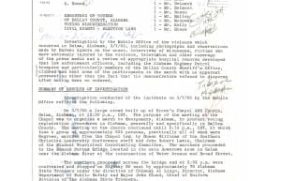
FBI Memos Summarizing Bloody Sunday
Postwar United States (1945 to early 1970s)
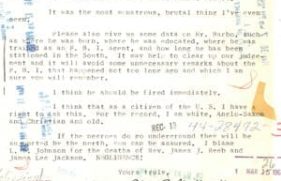
Letter to J. Edgar Hoover with Response
Postwar United States (1945 to early 1970s)