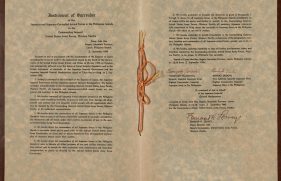
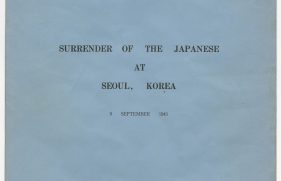
In 1945, during World War II, Japanese troops took control of Vietnam (under French rule at the time). At the end of the war, Ho Chi Minh—the Vietnamese Communist leader—seized an opportunity to escape decades of French rule. The day Japan surrendered to the Allies, Ho Chi Minh declared independence for Vietnam. He asked for American support of Vietnam’s independence from France. But the U.S. government adopted a neutral policy when France went to war to recolonize Vietnam in 1945.
In early 1946, Ho Chi Minh met with French officials to express a desire for independence. In March he signed the Ho–Sainteny agreement, also known as the March 6th Franco-Vietnamese Accord. This didn’t give Vietnam independence, but recognized it as a “free state” in the French Union; it permitted France to keep troops in North Vietnam. Ho Chi Minh traveled to Paris in the summer of 1946 for follow-up talks.